Embracing the Tension of a Sending Church

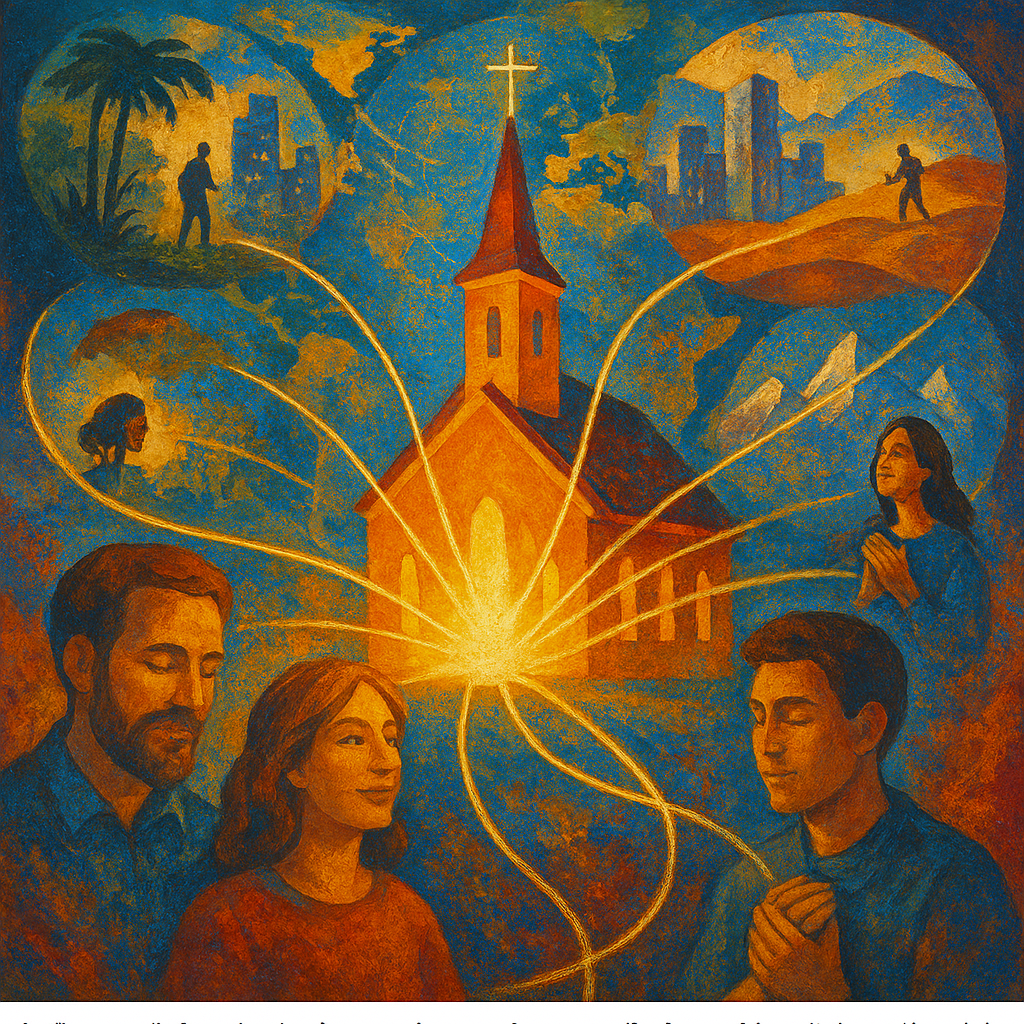
About a decade ago, an evangelist who was often used in the prophetic spoke a word over our church. He said that C3AG would be a sending church. In theory, that sounds like a great thing, but in practice, it is tough. In fact, there have been many times that I wanted to call that evangelist and give him a piece of my mind. He is now with Jesus, and honestly, his word for the church has come true repeatedly.

Being the pastor of a sending church is an emotional roller coaster. I live in the tension between excitement and dread. I am always excited when a new family comes to our church, but in the back of my mind, I wonder how long it will be before God calls us to send them out.

Though this tension exists in my mind, it is also fed by others in the American church who do not understand. They do not understand what God has called us to do. Right or wrong, the American church is obsessed with numbers. “How big is your church?” is a question believers and non-believers frequently ask me. I want to respond with, “Well, do you want the today number, or the number yesterday, before we sent out an entire congregation of our African brothers and sisters?” Tension!

Because we focus so strongly on numbers, we have wrongfully developed a belief that large things are always healthy and that small things are not. Health has many factors, and yes, it is true, numbers are a big part of that. I have had to shift my thinking…many times…many, many times, and will likely have to do so again. Over the years of my ministry, I have come to realize that true health in the body of Christ brings growth to the Kingdom, not just the local church.

In a recent teaching, one of my great friends reminded me that sending is an integral part of God’s plan for His Church. The church in Antioch was a sending church. It was a diverse church. It was a generous church. It was a Spirit-filled church. It was a healthy church that helped shape the spread of the Gospel across the known world. Essentially, it was a Kingdom-focused church. 

I recognize that many do not understand our approach to ministry, but I believe we stand on sound theology when we send out. Some of you may be wondering why this is a big deal. Well, we are not a large church, but over my years of being a pastor (12 as of today), God has called us to send out nearly 200 people, including groups, pastors, and missionaries.

If God has called you to send, send. Not everyone will understand. Not everyone will agree, but if it is what God has called you to do, be faithful, be willing, and be ready, because you will send out again very soon. 

Let me take just a moment to encourage you, Pastor. I know what it is like when a fellow pastor says that you are hurting your church by consistently sending out. I know what it is like to wrestle with God over numbers that you can’t seem to get to. You, like I, will live in tension. You are excited to see what God will do, but discouraged by the prospect of losing another faithful family. I know this firsthand, not just as a pastor, but as a dad. Several months ago, my wife and I sent our oldest daughter out to live on the other side of the globe. 

Pastor, be encouraged. Be faithful. Be honest with a friend when you are discouraged. Celebrate the sending. Embrace the tension. 

Christ’s Church is Multicultural:

Addressing the Politicization of a Biblical Concept

The term multicultural is getting a lot of attention these days. Some of that is good and some is not. From a social or even a political viewpoint, multiculturalism can lean into things like DEI and ensure that no culture is ever viewed as better than another. While there is value to some of these opinions, there is also a danger. We can easily fall into the trap of deconstructing our own culture while we raise the cultures of others. We may also believe that these things can be forced. Force may change a person’s actions, but it will not change a person’s heart.

Multicultural is not a new word or idea. At its core, it is not a political or social concept. It is a God concept. While humans try their very best to force equality, it is against human nature apart from God. In other words, multiculturalism is only truly attainable when Christ is at the center of it. Human nature will always gravitate toward the marginalization of someone or some group. That could be illustrated in our attitude towards those on the opposite side of the political aisle. Yes, Jesus died for them, too.

Think about this. If we want to value other cultures through a heart change, Jesus needs to be at the center. Why, because it is only through Him, in Him, and around Him that every person, no matter what color, race, ethnicity, or language, has infinite value. Multiculturalism in the body of Christ is not an artificial construct. It is a God construct found and rooted in Scripture from Genesis to Revelation. (See The New Testament in Color for examples.)

So, let me take a moment to define multiculturalism from a Biblical worldview. Multicultural means that every person on earth should have access to the Gospel (the story of Jesus). It means that every person, no matter their race, has equal value in the Body of Christ, His Church. It means that one of the most fundamental functions of His body is to reach the lost, all over the world, in every nation and in every culture. We call this missions. It is loving a person who looks and sounds different from us, just as Christ loves them. It is raising the value of a person who is marginalized because of tribalism or disability. It is loving as Jesus loves. That is what it means to be Biblically multicultural.

While those in the media, politics, or any other facet of society demand equality, there is genuinely only equality in Jesus Christ. Paul writes one of my favorite verses to the church in Galatia. “There is neither Jew nor Gentile, neither slave nor free, nor is there male and female, for you are all one in Christ Jesus.” (Gal 3:28 NLT) Only when we love like Jesus can we truly value every person who is different from us. Let’s be honest, none of us has fully attained this as we are all works in progress.

Our church’s mission statement is simple: “One Church, Many Nations.” In these words, we see the unity that should be present in Christ’s Church. We welcome the nations that describe our goal of reaching the lost (those who do not serve Jesus) in every corner of the world. It sets a tone of hospitality and community that is so important in almost every culture in the world. It affirms that we want to be like Jesus, love like Jesus, and worship Jesus. He is truly at the center of who we are as a multicultural church.

The Connection Between Replacement Theology and Antisemitism

Last week’s blog explored the historical connection between Manifest Destiny and today’s Christian Nationalism. I mentioned at the end that I would write further concerning Replacement Theology (supersessionism). In a nutshell, this philosophy teaches that the Church replaced Israel as God’s chosen people. We will explore what that means, the result of this thought, and why I believe it is a heretical stance.

If you live in the Western world, you are keenly aware of the rise of antisemitism. In one way, that seems very odd, growing up in a post-World War II world. My grandfather fought in North Africa and Southern Europe behind General Patton. My generation is very aware of the horrors perpetrated against the Jewish people following WWI. Hitler partially blamed the Jews for Germany’s defeat in WWI. Couple that with the punitive blame placed on Germany following WWI, and you have the seed of fascism rise in Germany.

Hitler grew up in a nominal Catholic home. He was baptized in the church, but his family did not actively practice their faith. Perhaps the lack of theological training contributed to many of his misguided ideas and, indeed, his evil motives. Hitler was also a product of his antisemitic culture. Many within the Lutheran Church and other mainline denominations in Germany held to replacement theology. There is evidence that Martin Luther believed and taught this theology, which led to antisemitic accusations being made against him.

The crux of this theology is that the Jews rejected Jesus as their Messiah and in so doing, sent Him to the cross. While this is true, blaming the Jews for Christ’s crucifixion seems counterproductive at best. Yes, the religious leaders of Jesus’ day rejected Him, but many ordinary people embraced Him. Yes, the Jewish leaders played a significant role in Jesus’ crucifixion, but to blame them is not to view the entirety of Scripture.

Let’s break down a few of these thoughts. First, when Adam sinned, man needed a Savior. In actuality, God knew man would sin before He created Adam and Eve. Revelation 13:8 states, “And all the people who belong to this world worshiped the beast. They are the ones whose names were not written in the Book of Life that belongs to the Lamb who was slaughtered before the world was made.” (NLT) God’s redemptive plan existed from the beginning…no, before the beginning.

Second, to be angry and blame the Jews is counterproductive and, frankly, stupid. What would the alternative be? Jesus does not go to the cross. In that scenario, we are all still lost in our sin. I am thankful that Jesus was willing to go to the cross at the hands of the Romans or the Jews. As Paul writes in Colossians 3:1-4, his death is equal to my life.

Third, it is not valid or logical to assume that because God’s hand of blessing is on the Church, it can no longer be on the Jewish people/nation. That seems to limit God. I’m pretty sure He is big enough and powerful enough to bless the Church and preserve the Jews, especially in light of end times theology. The Nation of Israel cannot be separated from the return of Christ. The reestablishment of Israel following World War II and the subsequent migration back to their historical homeland all play into God’s ultimate plan for humanity.

Third, we are instructed to pray for Jerusalem, as seen in Psalm 122. Do I believe the Jewish people are saved simply because they are Jewish? No. They must come to know and accept Jesus as their Messiah and Savior, just as we do. There is a prophetic promise concerning Israel in the book of Romans. It says, “And so all Israel will be saved. As the Scriptures say, “The one who rescues will come from Jerusalem, and he will turn Israel away from ungodliness.” (Romans 11:26 NLT)

Finally, and perhaps most clearly, two verses before, Paul writes, “You, by nature, were a branch cut from a wild olive tree. So if God was willing to do something contrary to nature by grafting you into his cultivated tree, he will be far more eager to graft the original branches back into the tree where they belong.” (Romans 11:24 NLT) The key word here is “grafted.” This is a horticultural term that is used when one plant species is connected to another and yet continues to grow. That is us. We are grafted into the tree of the Jews. We did not uproot them, nor did we replace them. We joined in the blessing of God that is theirs.

Replacement Theology is, at its core, antisemitic. It leads to the hatred of the Jewish people and, all too often, violent acts against them. Antisemitism has always existed. It was very evident in the 1200s (see the expulsion of Jews under Edward I in England), during the American Civil War, and during the WWI – WWII era, to name a few. It is sinful that crimes and hatred against the Jews came at the hands of “believers.”

In this atmosphere of rising antisemitism, the Church must support the Jewish people. That does not mean we support every policy and action of the Israeli government. Yet, history proves again and again, God will protect people. The Davidic covenant still stands. “Your house and your kingdom will continue before me for all time, and your throne will be secure forever.” (2 Samuel 7:16 NLT) The eternal King from David’s line is unmovable from His royal throne. Jesus Christ’s reign will remain forever!

For additional reading on Replacement Theology, see the following resources:

 Diprose, Ronald. Israel and the Church: The Origins and Effects of Replacement Theology, InterVarsity Press, 2004.

Grenz, Stanley J. Theology for the Community of God, Broadman & Holman, 1994.

Meyers, Jeff. Should Christians Support Israel?, Summit Ministries, 2024.

Many articles may also be found on the internet, both for and against.

Manifest Destiny: Historical Roots of Christian Nationalism

In our current political culture, we hear a lot about the idea of Christian Nationalism. Many ascribe this to President Trump and to many in the Christian right who seem to hold him as God’s ordained leader for this time. Let me begin by saying, President Trump is God’s ordained leader for this time, as was President Biden in his. The Bible is clear on this.

Romans 13:1 “Everyone must submit to governing authorities. For all authority comes from God, and those in positions of authority have been placed there by God.”

Daniel 2:21 “He controls the course of world events; he removes kings and sets up other kings. He gives wisdom to the wise and knowledge to the scholars.”

No amount of cheating, trickery, or vote suppression can subvert God’s will. We may not always like it, but God is in control. Along the way, American Christians have always believed that America holds a special place in God’s plan. While that might be true to a point, I’m thinking of the number of global workers sent from the US; it is a challenge to prove that our destiny is greater than that of other nations. Every nation has a part to play in the plan of God. Different as they may be.

From a historical perspective, the notion that Christian Nationalism is a new phenomenon is not accurate. Indeed, the philosophical name may change, but the idea remains the same. The most understood ideal is that of Manifest Destiny. This originated in the 18th century, stemming from the belief that God ordained the US to play a pivotal role in the coming Kingdom of God. Yet, this philosophy predates the 18th century.

Pilgrim leaders such as William Bradford and John Winthrop wrote about God’s protection, provision, and blessing on the new land. They believed that God ordained a haven for them to worship God as they pleased—something they could not do in England. This is also seen in the name of Rhode Island’s Capital, Providence. Which, ironically, was the only colony that welcomed people of all faiths, mainly Protestants, Roman Catholics, and Jews.

The concept of divine blessing was later adopted by subsequent generations of Americans, who developed the idea of Manifest Destiny, which continues to influence today’s Christian Nationalism. In between, we had the Moral Majority, the Religious Right, and many other titles that conveyed the same idea.

I cannot elaborate too much here, but suffice it to say that this idea is not new. It has been around for centuries. So, if that is the case, and it is, why bring it up? There are undoubtedly many who will disagree with my opinions here, but what fun is blogging if you can’t make a few people mad along the way 😊

In a broad sense, I recognize that God has been at work in our nation. I pray He continues to do so. I fear that, as the nation of Israel and Judah in the Old Testament, when we turn our backs on God, He will remove some of His blessings from us. It is not a given that just because we are ‘Merica,’ we can do what we want.

I also chose to write on this topic for another reason. The concept of Manifest Destiny is closely tied to the theological/spiritual notion of replacement theology. Many Christians throughout history believed that the Church is a replacement for Israel. As such, antisemitic opinions prevailed, even among firm believers like Luther and the Pilgrims. I am not making the argument that Christian Nationalists are antisemitic. If anything, it is the opposite. Most born-again believers are very pro-Israel, seeing their blessing as a signal of the end times. Where this becomes a problem is our opinion and view of other nations in our world. Beyond this, there is an opinion that American Christians must be in power to bring righteousness back to our nation. This is Kingdom Now theology at its core and is NOT BIBLICAL.

I certainly get that notion. Israel’s history is replete with examples of both righteous and unrighteous kings. As the leader went, the nation went. As New Testament believers, we often overlook one crucial aspect: the fulfillment of prophecy. Ironically, those who shout the loudest about prophecy are the first to stand against it in the political realm.  When Scripture says we will be hated, wrong will be right, and right will be wrong, men will be lovers of self rather than lovers of others; we act as if we have to force righteousness. In doing so, we could be found fighting against God’s will.

No matter who is in the White House or the head of any other nation, God is in control of who rules. Beyond that, every leader, every event in our world, somehow plays a part in pushing us toward the return of Christ. So, yes, I am a conservative Christian. Yes, I vote in every election, and yes, I cringe when I hear so many Christian Nationalists at times express unbiblical opinions. I want our nation to prosper, but I also know that Jesus is in control. The end times will come when the moment is right and there is nothing we can do in the ballot box or the pulpit to stop or accelerate Christ’s return. We don’t want to stop it, unless, as Jesus said, we want it delayed for a bit longer so others can come to know Him.

This will be a two-part blog. Part two will focus on replacement theology and the current pro-Israel movement within the Church.

On the Rapids: Exploring Pentecostal Orthodoxy

The development of our theological belief is like navigating a long, winding river. At each turn, we discover something new about ourselves, and more importantly, something new about our God. As a theologian, a minister, a church historian, and a pastor, I navigate these waters consistently. There are others present with us in this boat called faith. They challenge us through discussion and help us form practical solutions to spiritual problems.

Every turn on the river introduces us to a theological question, and often a historical figure who aided in the development of our doctrines. We may encounter Augustine as we grapple with worldly excess and pleasure. In the next turn, we may encounter Luther, the great reformer, who emphasized that followers of Jesus live by faith. I loved the turn where I encountered Saint Columba and his priests. I learned a great deal about trusting in our God from them. The Desert Fathers teach us to answer questions concerning the mystic nature of our God and the practice of our faith. It is a lifetime of learning and traveling down this very long river.

When the water is smooth and flowing freely, it is easy to navigate and almost relaxing to learn from the past saints of the church. As is so often the case on a natural river, this spiritual river has rapids. These are moments when we grapple with theological questions that remain unanswered in our lives. As C.S. Lewis writes in “The Great Divorce,” concerning grass, one person’s rapids may be another person’s smooth water. In other words, I may grapple with what you have already settled in your mind.

About six years ago, I hit the rapids of some Pentecostal beliefs. I do not call these doctrines, as they are not connected to the fundamentals of faith. It is an interesting and sometimes confusing ride. I grew up in a fully Pentecostal church where it was common to see all the expressions of spiritual gifts as outlined in 1 Corinthians 12-14. We also, on rare occasions, saw someone run, people falling out (slain) in the Spirit was frequent, and at times, some dancing in the Spirit. These are part of my faith tradition, much like Quakers Quaking or Shakers Shaking.

In my lifetime, we have experienced a marked decline in some of these expressions. That does not bother me, as I do not think these are the most important indicators of whether God is at work among us. Before we are too hard on these expressions, think of the man at the beautiful gate who leaped and ran when he was healed. I think there is a natural response when God does something supernatural among us.

My concern is deeper than these expressions of joy. It is the belief system of some Pentecostals that has kept me on the rapids for some years. Without going into too much detail, I would rather not point fingers here; I will share the experience that led me into the rapids. For a time, I had two opposite opinions with strong voices around me. One was all in with any and every expression of the Pentecostal experience and encouraged me to lean in…or God would not move. At the same time, I had a trusted voice in my ear warning me that we needed to remain more reserved. I don’t want to overstate, but I also do not want to understate the significance and frequency of these two sides.

After a season of wrestling with these questions, I realized yet again that I am an Orthodox Pentecostal. That does not mean I am part of the Orthodox Church, but rather that I adhere to the foundational beliefs the church has always held. And, even in my Pentecostal belief and practice, I hold to the standard that Scripture must be the basis, not the other way around. One of the great dangers of being a Pentecostal is that we may easily move to experience defining our theology. I see and hear this often.

So, what do I not believe and what do I believe…you are free to disagree with me.

I do not believe a generational curse, as taught by many, is a biblical doctrine. I do not believe that a believer can be demon-possessed. I do not believe you must speak in tongues to be saved. I do not believe that only Pentecostals will be in heaven. I do not believe it is appropriate to test God by using snakes in worship (yes, sadly, this happens, though limited). I do not believe there is a magic formula to move the hand of God, be it flags, banners, shofars, or words. Those things become incantations rather than acts of faith. I do not believe that every spiritual gift, though outlined in Scripture, is appropriate for every moment in a service. I do not believe wildfire is better than no fire…why does it have to be one of these options… can’t a contained fire also be an option?

I believe in the Baptism of the Holy Spirit with the evidence of speaking in tongues. I believe tongues are a gift for the believer to bring us a greater connection to God and greater boldness to witness. I believe all of the spiritual gifts are for today and should be evident in our church and lives as the Spirit directs. I believe in the five-fold ministry. I believe that healing was appropriated at the cross. I believe in God’s power to deliver from sin, addictions, and demonic possession/oppression. I believe that spiritual gifts must be practiced in an orderly manner. I believe it is okay to take medicine for sickness of the body or the mind. I believe speaking in tongues is both personal (prayer) and corporate (gift of tongues with interpretation). I believe it is appropriate to pray in the Spirit out loud in a service, as occurred on the Day of Pentecost…no interpretation is recorded here.  

I believe in the Trinity: Father, Son, and Holy Spirit.

I believe the same Spirit who empowers us can protect us.

I am an Orthodox Pentecostal!

The First Creed

My thought was to write today’s blog on the topic of why I am a Classical Pentecostal. However, as I studied for this coming Sunday’s message. I ran across an intriguing statement by the commentator William Barclay—his comment ties in so well with my blogs over the past few weeks. If you have not read them, I wrote about the multiple heresies that arose in the early church and the creeds that developed in response to them. Creeds are a statement of belief to counter heresy. I will let you look back to find those.

Today, I want to write about the very first creed and why it is the most essential creed ever written. It is not the Nicene or the Apostles’ Creed. It predates both. It is tucked into Paul’s letter to the Philippians.

In Chapter Two of that book, Paul explores the topic of Christ’s supremacy and His willingness to step out of heaven to live, walk, minister, die, and then be raised to life again, all among humanity. Every Christian creed honors Jesus, but most go on to proclaim other truths that we hold dear. All of which are important, yet there is a foundational truth on which every other creed is formed. I will take that further and state that this creed is the foundation of all Christian faith.

JESUS CHRIST IS LORD

This concise yet direct statement is found in Chapter 2, verse 11. Barclay writes:

              Philippians 2:11 is one of the most important verses in the New Testament. In it, we read that the aim of God, the dream of God, the purpose of God, is a day when every tongue will confess Jesus Christ is Lord. These four words were the first creed that the Christian Church ever had. To be a Christian was to confess that Jesus Christ is Lord.   

Our very faith is built on this single statement. Though I am not writing on the topic of being a Classical Pentecostal, let me assure you that this is part of that stance. So often, churches of all stripes deviate from this core foundational truth.  Our time, energy, and money are invested in secondary things. Good things, but secondary.

This statement serves as the foundation for all our actions, attitudes, and beliefs. If Jesus is Lord, then… I’ll give you a minute to fill in that blank.

Here are a few of mine:

              I give to missions because…

              I dedicate my kids to God because…

              I share my faith because…

              I tithe because…

              I volunteer at my church because…

I love because…JESUS CHRIST IS LORD!

The statements can go on and on, but the answer remains the same. Paul simplified our lives as believers into a single, simple creed that we can easily remember. The very essence of salvation is found in these words.

When I was five years old, I knelt at the altar in First Assembly of God, Tipton, MO. I prayed a prayer asking for forgiveness and asking Jesus into my heart. In so doing, I lived the testimony of these words. I declared then at my public baptism, Jesus Christ is Lord of my life.

In Paul’s day, as in our own, people try to find a shortcut to heaven or hold to a belief that any road will get us there. Paul raises his mighty pen and says, “NO.” Only Jesus Christ is Lord.

Creeds are an exceptional part of Christian faith, doctrine, and history. They are wonderful to read and to quote. Perhaps it is fitting that I end this series, for now, with the first creed. Maybe this is what God is calling us all back to. I do not need all the extras that come into the church; what I need is a new revelation and understanding of Christ’s Lordship of my life.

I am reminded of the story behind the song “I Have Decided to Follow Jesus.” It is said that this occurred in North India, where a group of Baptist missionaries and local believers came under intense persecution from the local tribal leaders. These families were commanded to recant their faith. If they did not, their wives and kids would die. They stood and said, “I have decided to follow Jesus.” Their families were martyred.

They were commanded again to recant their faith, or their coworkers would die. They stood and said, “Though none go with me, still I will follow.” Their coworkers were martyred.

Finally, only the leader remained. Again, he was commanded to recant his faith. He stood and said, “The cross before me, the world behind me.” He, too, was martyred.

Why would someone be willing to give their life and the lives of those they love? For one reason only, JESUS CHRIST IS LORD!

You can read the complete account of this story here: https://renewaljournal.com/2017/11/29/the-true-story-behind-the-song-i-have-decided-to-follow-jesus/

Separation and Unity?

This past Sunday, I preached from Philippians 2:1-2. In these verses, Paul emphasizes the need for unity within the Church. Unity is very elusive within the context of Church history. From the Great Schism in 1054 (the division within the Catholic Church that led to the formation of the Roman and Eastern Churches) to the Protestant Reformation, many point to disagreement as a cause of disunity.

Does disagreement have to cause disunity? If not, how do we define unity in the Church? Why do we have so many denominations if we are to be unified? These are some of the questions I will attempt to answer in today’s blog.

Disagreements on theology and the application of our beliefs have always been present in the Church. Peter and Paul disagreed with each other concerning the necessity of circumcision for gentile believers (Acts 15). Paul writes more extensively than any other biblical author about unity in the body of Christ. Yet, he was willing to stand up when he disagreed with another believer. Is that unity? In a broad sense, unity is about our common purpose more than every detail of theology that may get us to that end.

Indeed, the early church recognized the need for standards of faith and practice. Those are outlined in the creeds developed through church councils. Each creed is a response to a heretical ideal that arose mainly in the first 1,000 years of Church History. Please read my last four blogs for details on some of these heresies. Often, disagreements in the Church brought about a return to our foundational doctrines (Orthodoxy).

Author Bruce Shelly, “Church History in Plain Language,” writes about the formation of denominations throughout his book. He writes in the opening words of chapter 32, “For decades critics have called them “a scandal,” “a blight,” and “a factionalism,” but denominations remain the institutional hallmark of modern Christianity.” To fully understand denominationalism, we must look to history.

First, denominations developed due to a lack of proximity. Let me explain using my theological tradition. The Pentecostal church developed from the Azusa Street Revival in Los Angeles in 1906. As people from across the US came to Azusa, they took the Pentecostal witness back with them. Over the next few years, Pentecostal denominations experienced significant growth. Here is a brief outline: The Assemblies of God developed in Arkansas and Missouri, The Church of God in Eastern Tennessee and North Georgia, The Church of the Foursquare in Southern California, and the Church of God in Christ, an established denomination in Memphis, TN, embraced Pentecostalism.

These groups did not emerge from disagreements in theology; more than 100 years later, we all essentially still hold the same core doctrines.

Second, denominations grew around shared beliefs. Calvinism led to the formation of the Presbyterian church in Scotland, and Lutheranism formed around a strong Orthodoxy and remains close in practice to Catholicism, without some of the Roman Catholic theology, such as the veneration of Mary. The Anglican Church grew out of King Henry VIII’s desire to divorce. Rome said no. Henry said, Fine, I will be the head of a new Church of England. They, too, adhere closely to the theology of the Roman Catholic Church, while, like Lutheranism, abandoning some of the practices they deemed unnecessary or unbiblical.

Third, churches developed around a structure. There remain two main structures within the Protestant churches. They are Episcopal (using the title of Bishops) and Presbyterial (using the title Presbyter). The Assemblies of God uses presbyters, while the Church of God uses bishops.

Do these differences cause us to be disunified? My answer has always been no. I believe separation brings unity. We do not sit around and argue with our counterparts. Instead, with our differences in approach, structure, and nuances in theology, we work toward the same ultimate goal—the glorification of Jesus Christ in our world and the propagation of the Gospel. This is the very foundation of being Ecumenical.

Yes, we have differences, but we all believe the words of the Apostolic Creed, and we all want to see people’s lives changed by Jesus Christ. Shelley later writes in that same chapter a key to this understanding.

Denominationalism, as originally designed, is the opposite of sectarianism. A sect claims the authority of Christ for itself alone. It believes that it is the only true body of Christ; all truth belongs to it and to no other religion. So by definition, a sect is exclusive. The word denomination by contrast was an inclusive term. It implied that the Christian group called or “denominated” by a particular name was but one member of a larger group -the church- to which all denominations belong.

I have great friends who I love dearly who serve or attend a myriad of denominations. We are united in our pursuit of Jesus Christ and the reaching of the world. How we go about it may look a little different, but in the end, we are unified in worship and purpose. Can separation bring unity? It seems that it can. I applaud your work. I desire your fellowship. I honor your faithfulness to our Lord, no matter what denomination you are a part of.

“I believe in the Holy Spirit, the holy catholic church, the communion of saints, the forgiveness of sins, the resurrection of the body, and the life everlasting. Amen.” (Apostolic Creed)

The Dangers of Special Knowledge in Christianity

Over the past few weeks, we explored several heresies that arose in the early church. Each of them is still around today. Due to my schedule, I was unable to write last week, but I want to pick up where we left off.

Picture this! It is a beautiful sunny morning in the rural mountains of northern Appalachia. The little stream is bubbling, and the birds are singing their morning song. It is a beautiful place to commune with God. A young man is walking among the trees, crying out to hear a word from the Lord. His heart is tender, but his knowledge of God’s word is rudimentary at best.

Suddenly, an angel of the lord appears and reveals a secret message written a thousand years before. These messages are for this young man’s eyes only. No one else will ever see them, but in time, millions will take him at his word and follow this special revelation.

This is an illustration of Gnosticism, a heresy that the early church confronted. Gnosticism is from the Greek word gnosis, meaning knowledge. The word gnosis indicates a special or secret knowledge. Gnostics believed God revealed special knowledge to them. Therefore, they were at a higher spiritual level than those in the early church, including Paul.

Gnostics believed that the spiritual and the material were separate, and that salvation brought freedom from the material world. In other words, everything that is in the created world is bad. In one form, this would lead to the idea of mind over matter, Christian Scientism.

As it pertains to Christianity, Gnostics believed that an infinitely holy God could not come in the corruptible form of a human. Therefore, they denied the hypostatic union of Jesus (fully God and fully man). I touched on this in a previous blog titled, Understanding Arianism: The Danger of a Created Jesus.

Like most of these heresies, I could write a lengthy series, but time is limited, so let’s move on. As many of you may have recognized, the brief story I outlined at the beginning is that of Joseph Smith, the founder of Mormonism. Mormonism is shrouded in secrecy. No one has ever observed the gold plates or the magic glasses that Smith claims to have found. There has never been one shred of archaeological evidence that Jesus appeared in ancient Mesoamerica. Yet, this special knowledge continues to deceive.

Lest I only accuse the Mormons and Christian Scientists of this heresy, I will also point out that much spiritual abuse has occurred in the Church. Gnosticism, at its core, is special knowledge. Meaning, it is for me, not you. This, in and of itself, is spiritual manipulation, but on a broader basis, it denies the nature of the Trinity. God the Father longs for a relationship with humanity. Jesus, our Savior, came to reveal the Father to us and to redeem us through His blood. “Jesus replied, “Have I been with you all this time, Philip, and yet you still don’t know who I am? Anyone who has seen me has seen the Father! So why are you asking me to show him to you?” (John 14:9) In addition, it is the Spirit’s job to reveal Jesus and to lead us into all truth (John 16:3).

I grew up in church and just passed my 26th Anniversary in full-time ministry. I have seen a lot in my life. A lot of well-meaning people who, out of exuberance, misunderstand what God is saying. I have seen many who want spiritual authority badly enough that they will manipulate spiritual gifts to gain “special knowledge.” In that way, they seek to gain control or authority over the local pastor. I want to affirm here that I am not enamored with my authority, but I will ask anyone to leave our service who attempts to usurp it, especially on the grounds of, “I’m a prophet or apostle, you’re just a pastor.”

So, then, how do we protect ourselves? It’s actually quite simple. Know the Word of God. If Joseph Smith knew the Word, he ignored it; if he didn’t know the Word, he should have.

  1. Gal 1:8-9 “Let God’s curse fall on anyone, including us or even an angel from heaven, who preaches a different kind of Good News than the one we preached to you. I say again what we have said before: If anyone preaches any other Good News than the one you welcomed, let that person be cursed.”
  2. Ps 119:11 “I have hidden your word in my heart, that I might not sin against you.”
  3. Deut 4:2 “Do not add to or subtract from these commands I am giving you. Just obey the commands of the Lord your God that I am giving you.” Rev 22:18-19 “And I solemnly declare to everyone who hears the words of prophecy written in this book: If anyone adds anything to what is written here, God will add to that person the plagues described in this book. And if anyone removes any of the words from this book of prophecy, God will remove that person’s share in the tree of life and in the holy city that are described in this book.”

Any of the four of these verses should have stopped Smith. He should have recognized that what is contrary to the Word of God is always wrong. The entire situation contradicts the revealed Word of God. “Special Knowledge” brings power to the one who possesses it and servitude to those who do not. That is the opposite of what Jesus lived and taught.

As a classical Pentecostal, I want to assure you, no matter what you have heard, read, or believe, we do not hold prophecy or the interpretation of a tongue to the same level as Scripture. Instead, we follow Paul’s admonition, “Do not scoff at prophecies, but test everything that is said. Hold on to what is good.” (1 Thess 5:20-21).  Does God still speak to His people? Yes! However, it should align with the Word of God and the doctrines we hold so dear. It should always be given in a spirit of humility. It should never be used to manipulate or to advance an agenda. Those who do such things are denying the very nature of Christ, which is the root of Gnosticism.

Thanks for reading. I appreciate comments, likes, and shares.

Understanding Arianism: The Danger of a Created Jesus

In my last blog, I wrote about Sabillianism. That’s a fun word. Say that with me. As a recap, Sabillius believed that the Trinity was not three parts but only Jesus. This gave birth to the “Jesus only” or “Oneness” movement. As I mentioned, I struggle theologically on whether this doctrine will keep someone from entering heaven. That is based on the definition of salvation in Romans. Either way, how do I say this? It is a ridiculous and unbiblical doctrine.

Today, I want to address Arianism. The early church grappled with both ideas. The church’s response led to the writing of the Nicene Creed and a few other lesser-known creeds. So, why is this relevant today? As with Sabillianism, Arianism is still present today, most notably in Mormonism. Let’s begin by defining Arianism.

Arianism is the belief that Jesus is a created being like everything else in our world. Arius struggled with the biblical term “begotten” as used in Scripture. He assumes that Jesus was “begotten” of the Father only if He was created. Let me be clear: while I may struggle with the eternal effects of the Oneness doctrine, I do not struggle with Arianism. Believing in a created Jesus is to deny His very nature. To deny His very nature is to believe in a very different Jesus than Scripture presents, and further calls into question His salvific work on the cross.

If Jesus is created, He is not truly divine, nor is He coequal to the Father and the Spirit. That opens the door to more theological challenges than I can put into a single blog. But think of it this way. If Jesus was created, is it possible for Him to be the perfect spotless lamb? How does His miraculous prophetic birth play into salvation history if He is not God?

This is not only a bizarre thought from human logic but absolutely contrary to Scripture. That is one reason why Mormons are Arians. They do not believe the Word of God is authoritative, but subordinate to the Book of Mormon. This leads us into another heresy, Gnosticism (special knowledge). It also leads to a created Jesus. That is a heresy for another day.

Johanan (John) writings are explicit in their teaching, especially John 1.

John 1:1-5 NLT

“In the beginning the Word already existed. The Word was with God, and the Word was God. He existed in the beginning with God. God created everything through him, and nothing was created except through him. The Word gave life to everything that was created, and his life brought light to everyone. The light shines in the darkness, and the darkness can never extinguish it.”

Denying Christ’s divinity is to deny His ability to save us. C. S. Lewis famously stated of Jesus, “He is either liar, lunatic, or Lord.” The God-man Jesus Christ running around claiming to be God would be insane and an affirmation of the accusations thrown at Him by the Pharisees. He is not created! He is eternal! He is fully God and fully man! He was there at creation and through Him all was created! The creator is not created.

One of my favorite quotes is from Terry Fullam (Time With God, Word Publishing, 1991, 3.) “He had to become man because man was the one who had sinned. He has to be God because God was the only One who could do anything about the sin of man.” The great truth of Christianity is that our God came to die for our sins. Jesus is not Satan’s brother as Mormonism declares. He is not simply a good man, as Islam teaches. He is God! In every way, He is God.

I do not worship a created being, but our eternal Savior. Thousands upon thousands of believers did not give their lives for a good person, but for God. This is the truth of Scripture from Genesis to Revelation. This is the crux of the Gospel. Jesus Christ, fully God and fully man, came to save us. For that, He is infinitely worthy of our worship, now and forevermore.

Revelation 5:13 NLT

“And then I heard every creature in heaven and on earth and under the earth and in the sea. They sang: Blessing and honor and glory and power belong to the one sitting on the throne and to the Lamb forever and ever.” (Emphasis mine)

Deny the Denial

I know this may surprise some of you, but I do not have a tattoo. I know it’s weird for a modern pastor not to have a man bun, tattoo, and skinny jeans, but I don’t. Well, I do have skinny jeans. If I were ever to get a tattoo, it would be a Celtic Trinity knot or maybe my favorite name of God in Hebrew (I AM), but mostly the knot. I am of Scottish/Irish descent. I love the look and the affirmation that I am strongly Trinitarian.

I live in Kentucky, where there is a large group of Christians who deny the Trinity. These groups may be referred to as “Oneness,” “Jesus Only,” “modalists,” or the classical term “patripassianism.” (See The Story of Christianity Vol. I by Justo Gonzalez.) This is not a new belief. It originated from a priest named Sabillius who lived in third-century Rome. He believed that the Trinity is not three distinctive persons that make up the Godhead, but that the Father, Son, and Holy Spirit are all expressions or manifestations of Jesus…thus the term Jesus only.

Sabillianism resurged in the early 1900s as a new wave of Pentecostalism spread from the Parham School in Topeka, KS, and even more so from the Azusa Revival in LA. Charles Parham saw the first person in modern history baptized in the Holy Spirit with the evidence of speaking in tongues: a young lady named Agnes Ozman. She was a student at Parham’s school. Later, William Seymour, the leader of Azusa, also attended this school. However, Seymour was not baptized in the Holy Spirit until later. (Prayer that Ignites Revival by Joe Oden.)

Though Seymour received formal training from Parham, it did not take long before the two broke apart. Why? Sabillianism! Parham began to question the doctrine of the Trinity and expounded the “Oneness” gospel. Seymour denied the denial, holding firmly to the historical, and I might add Biblical, approach to the Trinity. We can see the obvious representation of the Trinity at Jesus’ baptism. (For fun reading, find the Oneness explanation of that event 😊)

Parham is not necessarily regarded as the father of the Oneness church, but his doctrines did influence its later formation. The United Pentecostal Church International’s website states, “The UPCI emerged out of the Pentecostal movement that began with a Bible school in Topeka, Kansas, in 1901 and with the Azusa Street Revival in Los Angeles, California, in 1906. It traces its organizational roots to 1916, when a large group of Pentecostal ministers began to unite around the teaching of the oneness of God and water baptism in the name of Jesus Christ.” The UPCI was formed in 1945 by merging two Oneness denominations. https://upci.org/about-the-upci/

So, can a Oneness Pentecostal be saved if the early church regarded Sabillianism as a heresy and worked to affirm Trinitarian doctrine? You may remember that I made a statement in the affirmative in my last blog. This is a very tricky question. There is more to Sabillianism than this single tenet, but let’s address the Oneness doctrine for a moment.

I sat under an amazing theology professor while in Bible College. Now, with the Lord, Dr. Purdy challenged us to think about this issue. Always the devil’s advocate, he would point us to two Scriptures.

Romans 10:9 says, “If you openly declare that Jesus is Lord and believe in your heart that God raised him from the dead, you will be saved.”

Here we understand that salvation is through Jesus Christ. Granted, the Holy Spirit plays a role. The act of salvation is through the atoning work of Jesus and our faith and trust in Him. If we apply this verse to Oneness theology, we can see they are saved.

Lest you think it’s that easy, read Matthew 12:31-32 “So I tell you, every sin and blasphemy can be forgiven—except blasphemy against the Holy Spirit, which will never be forgiven. Anyone who speaks against the Son of Man can be forgiven, but anyone who speaks against the Holy Spirit will never be forgiven, either in this world or in the world to come.” From this verse, one could argue that not believing in the person and work of the Spirit is blasphemy. Unfortunately, Jesus does not give us any details to help us here. We do not fully understand the nature of the word “blasphemy” in this context.

So then, why would I say that I believe people holding a Oneness theology are saved? The short answer is Spiritual Fruit and a sense of God’s presence when I am around them or see a service, whether it is Charity Galyle or a service with the Pentecostals of Alexandria. Ultimately, I am very thankful that God has to make that call, not me. It does make me think of the scripture about sin…it’s another tough one. 1 John 5:16-17 “If you see a fellow believer sinning in a way that does not lead to death, you should pray, and God will give that person life. But there is a sin that leads to death, and I am not saying you should pray for those who commit it. All wicked actions are sin, but not every sin leads to death.” “Not every sin leads to death.” Is it possible that Oneness theology fits in this space? They genuinely seem to love and honor Jesus, but their theology is wrong, doctrinally and from Church history.

In the end, I will strongly and adamantly Deny their Denial! The Trinity is a sound and proven doctrine. I echo the theme of the Apostle’s Creed: our God is three in one!

The building our church now owns was originally a Oneness church. On the first service here, 20 years ago, I was leading worship. We closed with this beautiful hymn:

Holy, holy, holy!

Lord God Almighty

Early in the morning

Our song shall rise to Thee

Holy, holy, holy!

Merciful and mighty

God in three persons

Blessed Trinity! (Emphasis Mine)

That was, of course, intentional. We are Pentecostal, but we are also unashamedly Trinitarian. Sing it with me loud, “God in three persons, blessed Trinity!” Now and forever!